

10 Aug 2026

Most organisations understand the importance of controlling serious risks. Yet many organisations can still seem to obsess over seemingly trivial issues like holding handrails, wearing PPE correctly, reverse parking, housekeeping standards.
So, the question is, why spend time on the small stuff when there are bigger risks to manage?
Psychologists have long observed that once people accept a small deviation from a standard, accepting a larger deviation becomes easier. Behaviour has a tendency to normalise itself.
To paraphrase Taiichi Ohno, the visionary Japanese industrial engineer, and his approach to standardisation and lean thinking:
"If you can tolerate one defect, you have made room for the next."
The broken window theory is explained by one damaged window is soon followed by others as if left unrepaired it signals that disorder can continue. This theory can be extended to one piece of litter beside a bin attracts more litter – it’s worth experimenting with that one!
In immature safety cultures, obsessing over minor issues can be counterproductive. If equipment is poor, procedures are weak and hazards are unmanaged, focusing on handrails and coffee cups can feel disconnected from reality.
However...
Once the fundamentals are in place, the small things take on a different purpose.
They become cultural signals. The real value of the small stuff is not necessarily the direct risk reduction. The value is the message it sends.
When people consistently use handrails, keep work areas tidy, wear PPE properly and follow simple site rules, they reinforce a shared understanding:
"This is a place where standards matter."
Every visible act either reinforces or weakens that message. What gets ignored is condoned and chips away at the culture.
High-performing safety cultures do not become distracted by minor issues; they use them deliberately. Not because every small act carries significant risk, but because every small act communicates expectations.
The challenge for leaders is knowing the difference between bureaucracy and culture.
A reverse parked vehicle will not prevent every incident.
A top on a coffee cup may not eliminate serious injuries.
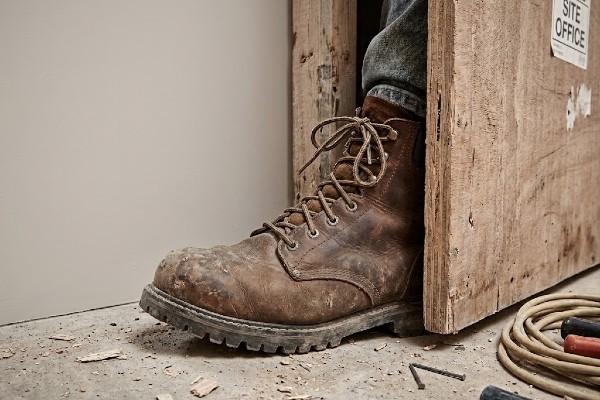
But visible attention to standards can help ensure that the first “foot in the door” doesn’t lead to more.
Safety culture is rarely lost through a single catastrophic decision. More often, it erodes through a thousand small permissions. The organisations that maintain strong cultures understand this. They don't focus on the small things because they are obsessed with rules. They focus on them because they recognise what those small things represent.
The danger of a foot in the door is not the behaviour itself. It is the permission that behaviour gives to everyone who sees it.
Our team is made up of facilitators, coaches, experienced actors, script writers as well as specialists in HR, employment law, safety and strategy.
Meet The Team